English

DNA Sequencing
DNA sequencing is a scientific method that allows scientists to determine the exact order of the four…
Reads at Grades 3–5 Listens at Grades 1–5
Print & create
Answer keys·No prep·Free with an account
28 worksheets · answer keys · full story · quiz · Ages 8-10 · CEFR B1
Plus adds 279,000+ more stories in 27 languages, audio for every one, and printables for all of them.
Just want DNA Sequencing?
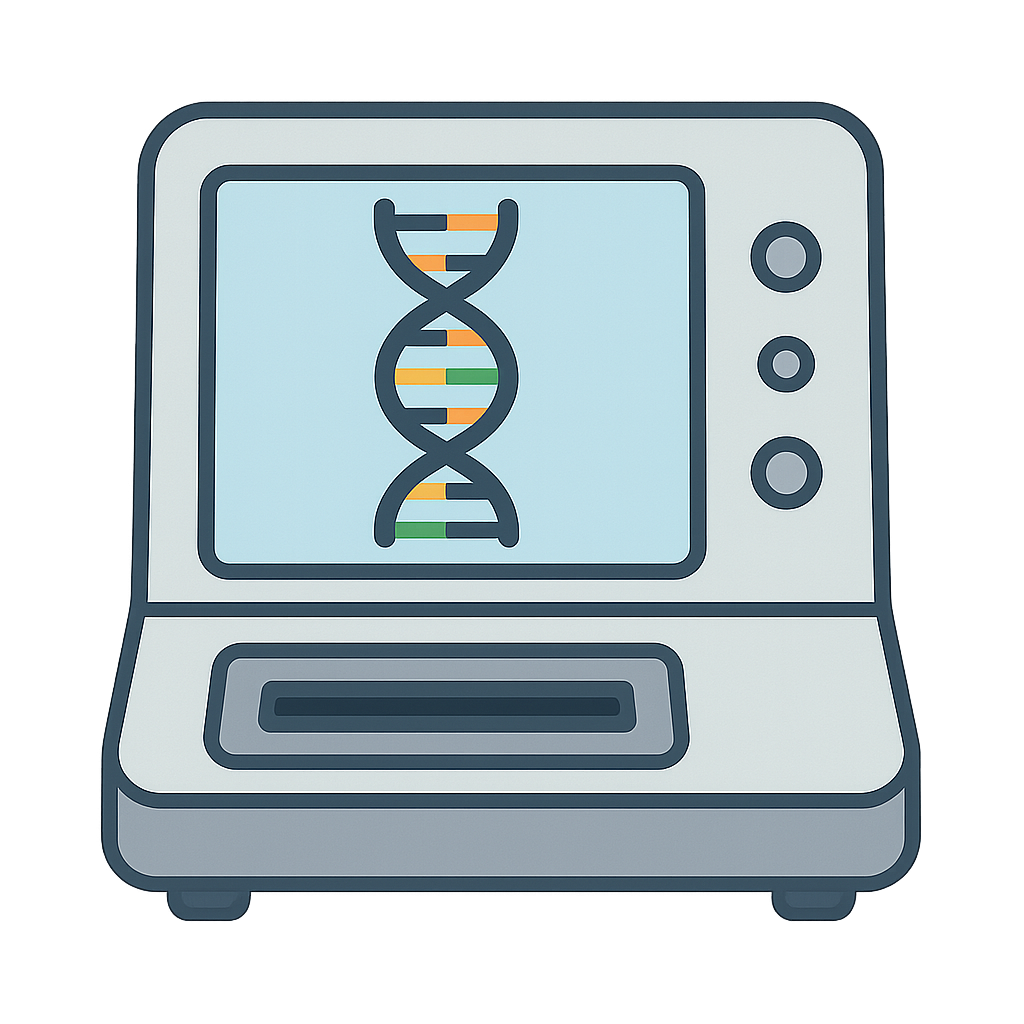
Hello, my name is DNA Sequencing, and I am a special kind of reader. I don’t read storybooks or magazines; I read the most important book in the world, the book of life. Imagine that inside every living thing, from the tallest tree to the smallest ladybug, there is a tiny, coiled-up instruction manual called DNA. This book is written in a special code with only four letters: A, T, C, and G. These letters spell out the instructions that tell a flower to be yellow, a dog to have floppy ears, or you to have brown eyes. For a very long time, this amazing book was a complete mystery. Scientists knew it was there, but it was so small and the code was so long that no one had any idea how to read it. It was like having a library filled with billions of books, but every single one was locked shut. That's where I come in. I am the key and the reader, all in one.
My story really begins with a brilliant scientist named Frederick Sanger. Back in 1977, he invented my very first version. He was like a clever detective who figured out a way to see the secret letters of the DNA code. His method was to attach a special, colorful glowing tag to each of the four letters. Then, he could carefully read the sequence, letter by letter, by looking at the order of the colors. It was an incredible breakthrough. For the first time, we could read sentences from the book of life. But it was very, very slow. Reading just one tiny section of DNA could take days. It was like trying to read an entire encyclopedia using only a tiny flashlight that could only show one letter at a time. Scientists knew they needed me to grow up and get much faster if they were ever going to read the whole instruction book for a human being. So, on October 1st, 1990, a huge team of scientists from all over the world started a giant mission called the Human Genome Project. Their only goal was to read the entire human DNA book from beginning to end. They worked together, sharing ideas and building new machines to help me read faster and more accurately than ever before. It was a long and difficult journey, but after many years of hard work, we did it. In April of 2003, I finished reading the very last page.
A Story of DNA Sequencing
Hello, my name is DNA Sequencing, and I am a special kind of reader. I don’t read storybooks or magazines; I read the most important book in the world, the book of life. Imagine that inside every living thing, from the tallest tree to the smallest ladybug, there is a tiny, coiled-up instruction manual called DNA. This book is written in a special code with only four letters: A, T, C, and G. These letters spell out the instructions that tell a flower to be yellow, a dog to have floppy ears, or you to have brown eyes. For a very long time, this amazing book was a complete mystery. Scientists knew it was there, but it was so small and the code was so long that no one had any idea how to read it. It was like having a library filled with billions of books, but every single one was locked shut. That's where I come in. I am the key and the reader, all in one.
My story really begins with a brilliant scientist named Frederick Sanger. Back in 1977, he invented my very first version. He was like a clever detective who figured out a way to see the secret letters of the DNA code. His method was to attach a special, colorful glowing tag to each of the four letters. Then, he could carefully read the sequence, letter by letter, by looking at the order of the colors. It was an incredible breakthrough. For the first time, we could read sentences from the book of life. But it was very, very slow. Reading just one tiny section of DNA could take days. It was like trying to read an entire encyclopedia using only a tiny flashlight that could only show one letter at a time. Scientists knew they needed me to grow up and get much faster if they were ever going to read the whole instruction book for a human being. So, on October 1st, 1990, a huge team of scientists from all over the world started a giant mission called the Human Genome Project. Their only goal was to read the entire human DNA book from beginning to end. They worked together, sharing ideas and building new machines to help me read faster and more accurately than ever before. It was a long and difficult journey, but after many years of hard work, we did it. In April of 2003, I finished reading the very last page.
Today, my job is more important than ever, and I am always busy reading. I help doctors understand why some people get sick. By reading a person’s DNA, I can find a tiny spelling mistake in their instruction book that might be causing a problem. This helps doctors find the best medicine to make them feel better. I also help scientists who study nature. I've read the DNA of giant blue whales, mysterious deep-sea creatures, and even woolly mammoths that lived thousands of years ago. This helps us understand how life on Earth is connected. I even help farmers. By reading the DNA of plants like corn and strawberries, I can help farmers grow crops that are stronger, healthier, and yummier to eat. Looking back, I started as just a slow, flickering flashlight in a huge, dark library. Now, I can light up the whole room. Every day, I am still reading and learning, unlocking the secrets hidden inside the book of life to help make our world a healthier, kinder, and more wonderful place for everyone.
Wow facts
About
DNA sequencing is a scientific method that allows scientists to determine the exact order of the four building blocks, or 'letters,' that make up a strand of DNA.
Take a Quiz
Question 1 of 5
The story says Frederick Sanger's method was like 'reading a giant book with a tiny flashlight.' What does this mean?
Explore next




Want to do even more?
Go beyond exploring. Unlock tools that turn every story into real learning.

Storypie Plus for families
Full stories, quizzes, and printables. Nights and car rides, sorted.
- Unlimited audio stories
- Create Mode: your child stars in the story
- Offline downloads
- Printable worksheets & coloring pages

Why Storypie for Schools
Students engaged. Prep in seconds. Evenings back to you.
- Worksheets & Quizzes
- Classroom Management
- Formative Assessment
- Custom Curriculum & Lesson Plans
- 27 Languages

Why Storypie for Homeschool
Curriculum done. They'll ask for more. Hours back in your day.
- Worksheet Generator
- First-Person Audio Stories
- Built-in Comprehension Quizzes
- Custom Curriculum & Lesson Plans
- Print & Go Activities